Discover How Aluminum Foundry Experts Create Precision Components for Engineering
Wiki Article
Everything About Metal Casting: Just How Foundries Supply High Quality and Precision in Production
Metal casting stands as a fundamental process in manufacturing, where raw steels are transformed right into details components. Foundries employ numerous casting methods to attain desired attributes and shapes. Each method includes its own set of advantages and limitations. Understanding these nuances is crucial for appreciating just how top quality and precision are kept throughout the procedure. The conversation ahead will check out the intricate characteristics of metal casting and its relevance across multiple sectors.The Basics of Metal Casting
Metal casting is an essential procedure in producing that entails forming liquified metal into preferred forms. This important technique starts with the choice of basic materials, typically various metal alloys, which are thawed in a furnace. When the metal gets to the appropriate temperature level, it ends up being prepared and liquid for casting.The process calls for a mold, usually made from sand, metal, or ceramic, which defines the final shape of the cast object. As soon as the liquified metal is poured right into the mold and mildew, it strengthens and cools down, taking on the mold and mildew's shapes.
After cooling, the casting is gotten rid of from the mold, and any needed finishing procedures, such as brightening or trimming, are performed. This method allows makers to create complicated forms and components with high precision and minimal waste. Metal casting is extensively utilized throughout different sectors, from auto to aerospace, emphasizing its importance in modern-day production.
Sorts Of Casting Methods
While different casting approaches exist, each method supplies special advantages and is matched for various applications. Sand casting, one of the most typical techniques, uses sand as the mold and mildew product, enabling for elaborate designs and large components. Investment casting, understood for its precision, utilizes a wax pattern coated in ceramic, making it excellent for complicated geometries. Pass away casting, which entails requiring liquified metal right into molds under high stress, is regularly used for mass manufacturing of little, comprehensive elements. Furthermore, covering molding combines sand and resin to produce thinner, much more exact molds, enhancing surface area coating. An additional technique, constant casting, enables the production of lengthy lengths of metal shapes, improving manufacturing processes. Each of these methods plays a critical function in the metal casting sector, dealing with specific requirements from production volume to create complexity, thereby contributing to the variety of applications throughout various fields.The Role of Foundries in Production
Foundries serve an important feature in the production landscape, as they transform raw metals right into functional parts via various casting procedures. These facilities employ an array of strategies to create products that meet exact requirements, thereby ensuring top quality and performance in production (Aluminum Foundry). By utilizing approaches such as sand casting, financial investment casting, and pass away casting, factories deal with diverse markets, consisting of automotive, aerospace, and construction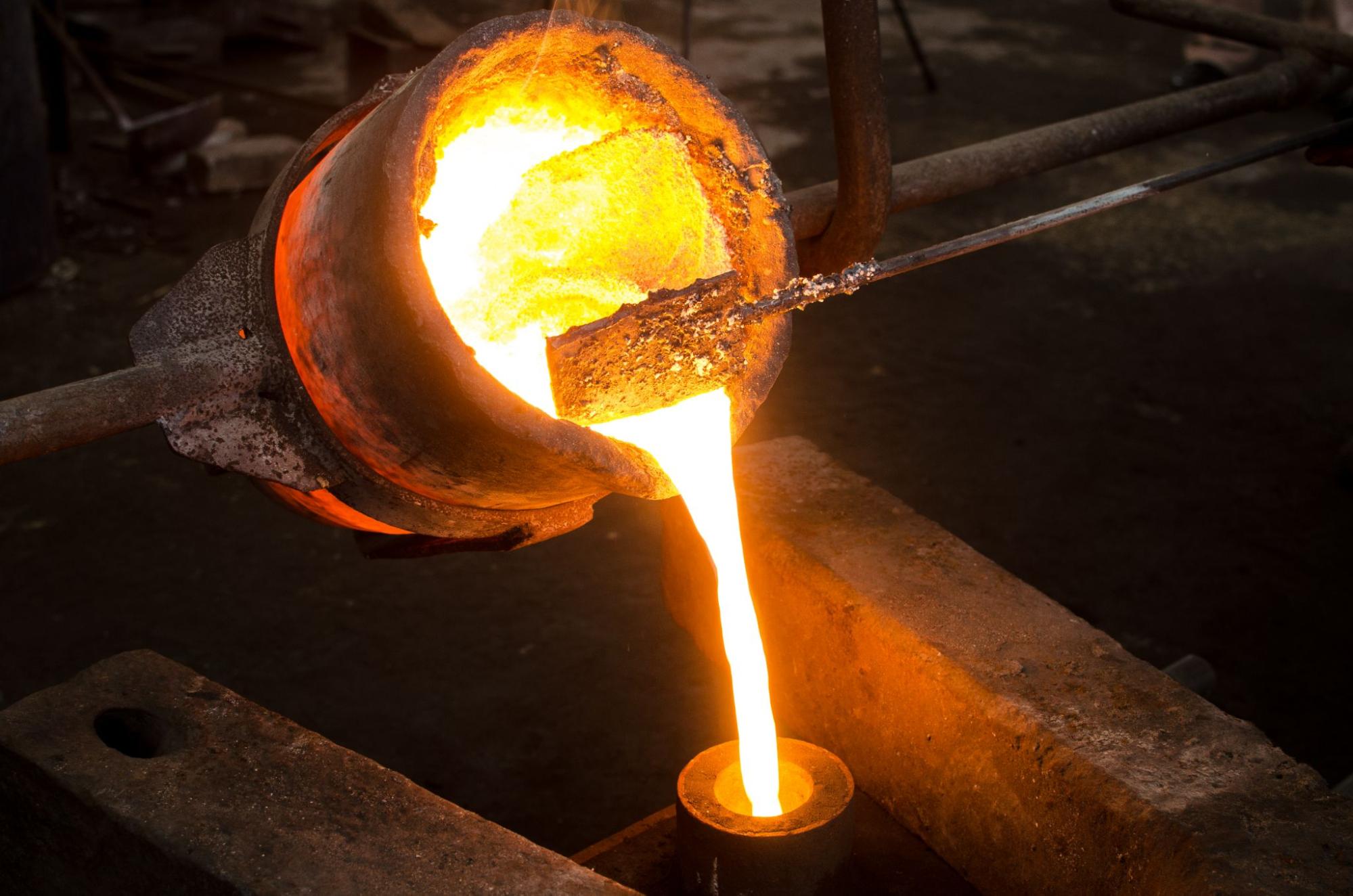
Eventually, foundries are important to the production ecological community, offering critical parts that support a vast selection of industries and applications. Their precision and versatility drive performance in modern-day manufacturing.
Products Utilized in Metal Casting
The selection of products utilized in metal casting is necessary for attaining the desired homes and performance of the last product. Various metals such as bronze, iron, and aluminum are commonly used, each offering unique benefits. Aluminum is favored for its corrosion-resistant and lightweight top qualities, making it optimal for automobile and aerospace applications. Iron, especially cast iron, is known for its exceptional fluidness and strength, appropriate for heavy machinery and infrastructure parts. Bronze, with its premium wear resistance, is commonly made use of in marine settings.In addition, products such as silica sand are often used for mold production, offering a fine balance in between resilience and simplicity of shaping. The option of products likewise includes ingredients like changes, which improve the casting procedure by boosting fluidity and minimizing oxidation. Eventually, the proper choice of these products substantially affects the efficiency and quality of the casting process.
Quality assurance in the Casting Process
Quality control in the casting procedure is necessary to assure that last products meet sector criteria and specifications. Various evaluation techniques are employed to recognize problems and examine the stability of actors elements. In addition, adherence to established qualifications and criteria enhances the dependability and performance of actors materials.Evaluation Techniques Employed
Preserving the integrity of cast metal parts counts greatly on various evaluation techniques. Foundries employ visual assessments as a preliminary measure to recognize surface area problems, such as incorporations or fractures. Non-destructive screening (NDT) approaches, including ultrasonic testing and radiographic examination, are vital for identifying interior problems without jeopardizing the component's stability. Dimensional examinations making use of calipers and coordinate measuring makers verify that elements satisfy specified tolerances. In addition, chemical analysis verifies that the alloy structure lines up with needed standards. These assessment techniques collectively validate that the spreadings fulfill the essential quality and performance requirements, ultimately decreasing the threat of failure in their desired applications. Implementing these extensive inspections is basic for maintaining high requirements in metal casting manufacturing.Criteria and Certifications
Requirements and qualifications play a crucial function in the top quality control of the casting process. Foundries follow different international and industry-specific requirements, such as ISO 9001 and ASTM standards, guaranteeing uniformity and dependability in their products. These criteria outline the essential standards for materials, production methods, and screening procedures, adding to a more reliable production process. Certifications, such as AS9100 for aerospace applications, better highlight the value of quality assurance in specialized markets. By acquiring these qualifications, shops demonstrate their dedication to quality, lowering flaws and improving consumer satisfaction. Routine audits and assessments confirm compliance, promoting continuous renovation and technology within the market. Inevitably, adherence to established requirements grows count on between clients and suppliers.Developments in Casting Technology
3D Printing Integration
Incorporating 3D printing innovation right into metal casting processes is transforming the manufacturing landscape. This innovative blend enhances the layout and manufacturing of complex geometries that conventional techniques battle to achieve. By employing additive production for producing molds and cores, foundries can significantly decrease lead times and material waste. Additionally, 3D printing enables rapid prototyping, enabling makers to examine styles rapidly and efficiently, consequently assisting in repetitive enhancements. This innovation also sustains the manufacturing of light-weight parts, which are necessary in sectors like aerospace and automobile. Because of this, the integration of 3D printing not just simplifies procedures but likewise elevates the precision and high quality of actors metal products, marking a notable innovation in the market.Automated Production Processes
The improvements in 3D printing have actually led the way for additional developments in automated production procedures within metal casting. Foundries are significantly embracing robotics and automation to enhance effectiveness and precision. Automated systems simplify the entire casting operations, from mold development to putting and completing. Smart sensors and real-time tracking enable accurate control of temperatures and material flow, decreasing waste and boosting top quality. Additionally, software application services assist in much better design and simulation, allowing producers to optimize processes before production begins. These automated production processes not just decrease labor prices yet also decrease human mistake, making sure constant result. Therefore, the assimilation of innovative innovations in metal casting is changing production abilities and satisfying the growing needs of different sectors.Advanced Material Advancement
As industries demand greater efficiency and sustainability, developments in material development for metal casting are becoming a crucial focus. Engineers and researchers are checking out brand-new alloys and compounds that enhance mechanical buildings while decreasing environmental effect. Technologies consist of lightweight products that keep stamina, enabling better gas performance in transportation applications. Furthermore, the unification of recycled products is coming to be a lot more prevalent, aligning with sustainability objectives. Advanced casting methods, Aluminum Foundry such as 3D printing and precision molding, permit for the production of complex geometries that typical methods can not attain. These growths not just improve the capability of cast parts yet additionally boost production performance. On the whole, the continual evolution of product scientific research drives the future of metal casting, meeting the demands of modern-day industries.
Applications of Metal Casting Across Industries
Metal casting plays an essential duty in numerous sectors, as it permits the manufacturing of complex shapes and top quality components with family member efficiency - Aluminum Casting. In the automotive market, cast steels are important for producing engine blocks, transmission instances, and various other important components that require sturdiness and precision. Aerospace industries make use of metal casting for components like generator blades and structural aspects, where dependability is extremely importantIn addition, machinery and equipment manufacturing benefit from metal casting by generating gears, housings, and various other detailed components that boost performance. The building industry also employs metal casting for building functions, structural assistances, and fittings, showcasing flexibility.
Moreover, the clinical field depends on actors steels for medical tools and implants, emphasizing the need for biocompatibility. Generally, metal casting is a foundational process throughout numerous industries, supplying options that satisfy rigorous top quality criteria and performance demands.
Regularly Asked Questions
What Precaution Are Taken in Metal Casting Foundries?
In metal casting shops, safety actions consist of protective gear, ventilation systems, normal devices upkeep, staff member training, and emergency methods to mitigate threats related to high temperatures, harmful products, and possible crashes during the casting process.How Do Foundries Handle Waste and Environmental Effect?
Foundries take care of waste and ecological influence through reusing materials, carrying out filtration systems for discharges, and sticking to regulations - Aluminum Casting. They likewise adopt sustainable methods, such as minimizing power consumption and using green compounds in their proceduresWhat Are the Prices Connected With Metal Casting Procedures?
The expenses associated with metal casting processes consist of raw materials, labor, tools upkeep, power intake, and waste monitoring. In addition, variations in market value and compliance with environmental guidelines can considerably impact general expenses for foundries.Exactly How Does Metal Casting Compare to Other Production Methods?
Metal casting offers distinctive advantages, such as complex shapes and high material effectiveness, contrasted to techniques like machining or stamping. It might involve longer lead times and greater initial prices, depending on job specifications.
What Occupation Opportunities Exist in the Metal Casting Market?
The metal casting market uses different job chances, including shop monitoring, process design, quality guarantee, mold design, and maker procedure. Professionals can additionally go after duties in r & d, sales, and ecological wellness and safety and security.Metal casting stands as a foundational procedure in manufacturing, where raw steels are changed into specific components. Metal casting is an essential procedure in making that involves shaping molten metal right into wanted forms. One more technique, constant casting, makes it possible for the manufacturing of long sizes of metal shapes, improving manufacturing processes. The prices linked with metal casting procedures include raw products, labor, tools upkeep, power intake, and waste monitoring. The metal casting market provides numerous job possibilities, including foundry management, procedure engineering, top quality guarantee, mold layout, and device procedure.
Report this wiki page